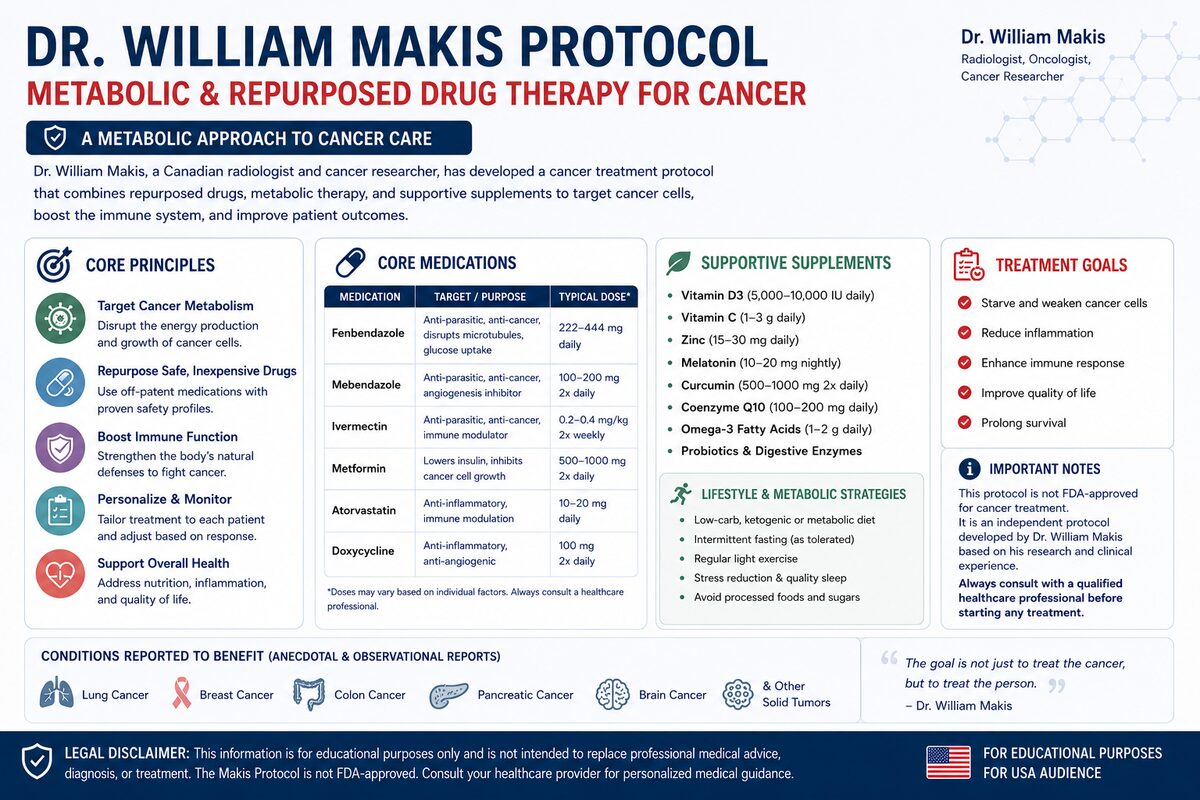
Dr. Makis Protocol for Cancer: An Informational Overview
The Dr. Makis Protocol for Cancer has gained significant attention among cancer patients searching for alternative and complementary approaches to cancer care. The protocol is commonly associated with the use of repurposed medications such as ivermectin, fenbendazole, and mebendazole alongside nutritional support and lifestyle modifications.
Many individuals researching advanced cancers, metastatic cancers, and difficult-to-treat tumors have encountered discussions surrounding this protocol online. However, it is important to understand both the potential benefits and the limitations of the available evidence.
What Is the Dr. Makis Protocol?
The Dr. Makis Protocol is an alternative cancer-care approach discussed by Canadian physician Dr. William Makis. The protocol focuses on repurposed medications that have traditionally been used for other medical conditions but are being investigated for possible anticancer properties.
Commonly discussed medications include:
- Ivermectin
- Fenbendazole
- Mebendazole
- Metformin
- Vitamin D
- Curcumin
- Melatonin
- Nutritional supplements
The protocol is generally promoted as a complementary strategy rather than a replacement for professional oncology care.
Why Are Repurposed Drugs Being Studied for Cancer?
Drug repurposing has become an active area of medical research because existing medications often have well-known safety profiles and lower development costs.
Researchers are investigating whether certain medications may:
- Affect cancer cell metabolism
- Influence tumor growth pathways
- Reduce inflammation
- Support immune system activity
- Enhance the effectiveness of existing treatments
While promising laboratory findings exist for some medications, clinical evidence remains limited in many cases.
Ivermectin and Cancer Research
Ivermectin is an antiparasitic medication that has been studied in laboratory settings for possible anticancer effects.
Researchers have investigated whether ivermectin may:
- Influence cancer cell signaling pathways
- Affect tumor growth mechanisms
- Support immune responses
- Increase cancer cell sensitivity to treatment
However, laboratory results do not necessarily translate into proven benefits for human cancer patients.
Fenbendazole and Cancer Research
Fenbendazole is a veterinary antiparasitic medication that became widely discussed after anecdotal reports from cancer patients appeared online.
Potential mechanisms being studied include:
- Microtubule disruption
- Cellular energy metabolism changes
- Effects on cancer cell growth
Currently, there is insufficient clinical evidence to conclude that fenbendazole is an effective cancer treatment.
Mebendazole and Cancer Research
Mebendazole is another antiparasitic drug that has attracted interest among researchers.
Potential areas of investigation include:
- Brain tumors
- Colon cancer
- Lung cancer
- Melanoma
Some early studies suggest potential anticancer activity, but additional human clinical trials are needed.
Potential Benefits Claimed by Supporters
Supporters of the protocol frequently cite:
- Accessibility of medications
- Lower cost compared with some therapies
- Existing safety data for approved uses
- Ongoing research into repurposed drugs
- Interest in complementary treatment strategies
Important Limitations
Patients should understand several key limitations:
- Limited large-scale clinical trials
- Insufficient evidence for many cancer types
- Unknown effectiveness compared with standard treatments
- Potential drug interactions
- Variable dosing recommendations online
Should Patients Consider the Protocol?
Any decision regarding cancer treatment should be discussed with a qualified oncology team. Patients interested in repurposed medications should review the available evidence, potential risks, and treatment goals with their healthcare providers.
The most appropriate treatment approach depends on:
- Cancer type
- Cancer stage
- Overall health
- Current medications
- Individual treatment history
Conclusion
The Dr. Makis Protocol has generated significant interest among cancer patients seeking information about repurposed drugs such as ivermectin, fenbendazole, and mebendazole. While ongoing research continues to explore the potential role of these medications, current evidence remains incomplete, and standard oncology care remains the established treatment approach for most cancers.
Patients should carefully evaluate available information and consult qualified healthcare professionals before making treatment decisions.
FAQ
What is the Dr. Makis Protocol?
The Dr. Makis Protocol is an alternative cancer-care approach that discusses repurposed medications and supportive therapies.
Does the protocol cure cancer?
There is currently no scientific evidence demonstrating that the protocol cures cancer.
Why are ivermectin and fenbendazole discussed in cancer communities?
Laboratory studies and anecdotal reports have generated interest, but definitive clinical evidence remains limited.
Can repurposed drugs replace chemotherapy?
Patients should consult their oncologists before making any treatment changes. Standard treatments remain the established approach.
Is fenbendazole approved for cancer treatment?
No. Fenbendazole is not approved as a cancer treatment.
Is ivermectin approved for cancer treatment?
No. Ivermectin is not approved as a cancer treatment.
Are clinical trials underway?
Researchers continue to investigate various repurposed drugs, although evidence differs among medications and cancer types.
Should cancer patients discuss repurposed drugs with their doctors?
Yes. Any medication or supplement should be reviewed with a qualified healthcare provider.
```